






If you spent any time on Pinterest or Instagram over the last decade, you know the exact aesthetic that dominated our feeds: stark, brilliant white. We painted our walls "Decorator’s white," bought bleached-oak furniture, and scrubbed our spaces until they looked like contemporary art galleries.
At the time, it felt incredibly clean and modern. But as we’ve settled into 2026, many of us are looking around those bright white rooms and realizing something uncomfortable: they feel a little bit like a hospital.
Pure white reflects up to 90% of the light that hits it. In a brightly lit room, this creates a subtle, constant glare that physically tires out your eyes and keeps your nervous system on edge. It’s the visual equivalent of listening to a high-pitched hum.
We are officially craving visual rest. We want spaces that feel lived-in, grounded, and rich. Enter the defining color palette of 2026: Cream and walnut.
At Forest Homes, we are watching this pairing completely take over high-end interior design, and for good reason. It is the perfect antidote to the sterile white box. Here is exactly why the cream and walnut combination is the new foundation for a calm home, and how you can actually pull it off without it feeling dated.
1. The psychology of contrast: Why your brain loves this pairing
To understand why this specific combination feels so incredibly good to walk into, we have to talk about how the human eye processes contrast and light.
In interior design, we use something called Light Reflectance Value (LRV). This is a scale from 0 (absolute black) to 100 (pure white) that measures how much light a color reflects.
When a room is entirely high-LRV (all pure white and light gray), there is nowhere for the eye to rest. It lacks depth. On the flip side, a room that is too dark feels cave-like and heavy.
Cream and walnut strike the perfect biological balance. Cream has a slightly lower LRV than pure white. It absorbs just enough light to eliminate that harsh, clinical glare, wrapping the room in a soft, diffused glow. Walnut, on the other hand, is a deep, rich, low-LRV material. When you put a dark walnut dining table against a textured cream wall, you provide the eye with a strong, definitive "anchor."
This balance of a soft, expansive background (cream) and a heavy, grounding foreground (walnut) creates an environment that our brains interpret as stable and secure. It is the exact psychological comfort we discuss in our guide on how interior design affects mental health.
2. The architectural masters of warm minimalism
If you want to see how this pairing works in the real world, you just have to look at the architects and designers who are defining the current "quiet luxury" and warm minimalism movements.
Take the work of Vincent Van Duysen, the acclaimed Belgian architect and artistic director for brands like Molteni&C. Van Duysen is famous for creating spaces that are incredibly minimal, yet deeply warm and tactile. He almost never uses stark white paint. Instead, his walls are often a rich, plaster-like cream, bone, or pale taupe. Against this soft canvas, he layers heavy, dark, smoked woods and deep walnut tones.
The result is a space that feels monastic, quiet, and timeless.

Similarly, look at the styling work of Colin King, who has defined the visual language of modern home decor in the 2020s. King constantly uses the friction between light and dark. He will place a vintage, heavily grained walnut bowl on a creamy limestone counter.
Why their approach works: These designers understand that minimalism doesn't have to mean "cold." By limiting their color palette to cream and walnut, they force you to notice the texture of the materials. The room stops being about loud colors and starts being about the quality of the wood grain and the softness of the light.
3. How to get the "cream" right (Hint: It’s all about texture)
The biggest fear people have when introducing cream into their homes is that it will look like the cheap, yellowish "builder-grade beige" of the early 2000s.
To make cream look like a 2026 luxury neutral, you have to follow one strict rule: Never use flat paint.
Flat, untextured cream paint lacks dimension. When light hits it, it looks dead. To make cream work, it has to have texture. The texture catches the light, creating micro-shadows that give the color depth and movement.
-
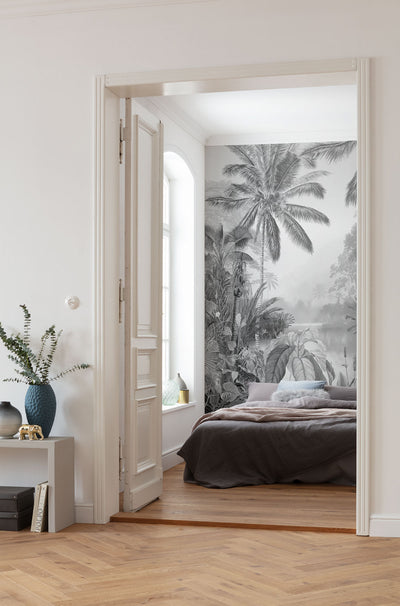
Textured walls: Instead of plain paint, designers are using limewash, Roman clay, or heavily textured wall coverings. If you want to warm up a living room, applying a subtly textured, warm-toned wallpaper instantly softens the acoustics and the light in the room, creating a beautiful cream canvas.
-
Textured fabrics: If you can't change your walls, bring cream in through textiles. Swap out your bright white cotton throw pillows for raw, unbleached linen or heavy bouclé from our Earthy & Neutral Collection. The physical weave of these fabrics makes the cream color feel intentional and expensive.
-
Warm lighting: Cream walls only work if your lighting supports them. If you use cool-toned LED bulbs, cream will look sickly and green. You must use warm bulbs (around 2700K) housed in Sustainable Lighting fixtures made of natural linen or rattan to cast a soft, amber glow that makes cream walls look incredibly inviting at night.
4. Why walnut is the "investment wood" of the decade
For years, the design world was obsessed with either pale, bleached Scandinavian oak or heavily distressed, gray-washed farmhouse woods. Both of those trends have firmly passed.
In 2026, we are returning to woods that have history, gravity, and elegance. Walnut is leading the charge.
Walnut is a dense, durable hardwood with a tight, incredibly complex grain pattern. It ranges in color from a light, milk-chocolate brown to a deep, purplish-black.
How to style walnut without it feeling heavy: The key to using walnut today is the shape of the furniture. We aren't talking about the massive, chunky, heavy wooden furniture of the 1990s. The new way to use walnut is through sleek, organic, and architectural forms.
A mid-century inspired walnut sideboard with tapered legs, or a beautifully carved wooden accent piece from our Earthy & Neutral Collection, adds massive visual weight to a room without making it feel cluttered.
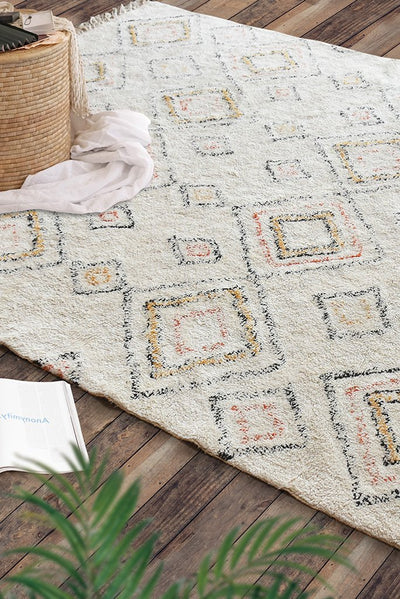
Because walnut has such a strong visual presence, you don't need a lot of it. It acts as a grounding anchor. A single walnut coffee table sitting on a cream-colored rug is often all you need to completely change the center of gravity in your living room.
5. The vital third element: Bridging the gap with greenery
While cream and walnut are a perfect pair, a room entirely composed of just two colors can eventually feel a bit flat. Every great interior needs a "bridge" element—a third color or texture that ties the background and the foreground together and adds a spark of life.
When working with warm neutrals and dark woods, the absolute best bridge element is the deep, vibrant green of the natural world.
Green sits perfectly opposite the warm, reddish-brown undertones of walnut on the color wheel. When you place a hit of greenery next to a piece of walnut furniture, both colors instantly look richer and more vibrant.
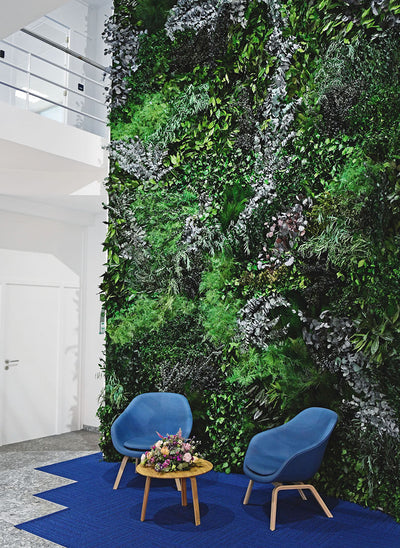
If you don't have the time or the natural light to maintain a massive indoor garden, this is where Preserved Moss Art becomes your best design tool.
Hanging a large, vibrantly green moss frame against a textured cream wall, positioned right above a walnut console table, creates the ultimate 2026 vignette. It combines the softness of the cream, the grounding history of the wood, and the biological necessity of nature into one perfect sightline.
Bringing it all together
Transitioning your home away from stark whites and grays doesn't have to mean starting from scratch. You can build the cream and walnut aesthetic slowly, layer by layer.
Start by softening your lighting with natural fiber lampshades. Then, introduce a single, beautiful piece of dark-grained wood to anchor your seating area. Finally, layer in textured, unbleached linens to soften the edges.
You will be amazed at how quickly your home stops feeling like a showroom and starts feeling like a sanctuary. When you give your eyes a break from the glare of pure white and give your nervous system the grounding anchor of natural wood, your home finally becomes a place where you can truly rest.
Ready to warm up your space? Explore the Earthy & Neutral Collection at Forest Homes and find the textured, grounding pieces your home has been waiting for.




Leave a comment