




Have you had that moment where you walk through your front door after a long day, drop your keys, and instead of relief, you feel a low, buzzing tension? Maybe it’s harsh lighting, clutter, or a view of concrete and glass. Your home should restore you, but often it feels like it just stores your stuff. If your walls feel like they’re closing in, you’re not “sensitive”, you’re human. Our nervous systems evolved in nature, not in gray, enclosed spaces.
Whether you’re burned out, overwhelmed at home, or craving a bit of green in the city, the solution isn’t just decorating, it’s biophilic design powered by neuroaesthetics: shaping spaces that work with your brain. This isn’t about adding a single plant. It’s about intentionally designing your environment to lower stress, calm your body, and give your mind room to breathe.
In this article, we provide a few tips that will allow you to stop designing for Instagram, and start designing for your nervous system.

In this article, we cover the following:
-
What is neuro-aesthetics?
-
Why a stress-free home is non-negotiable?
-
Neuro-aesthetic design tips:
1. Natural light strategies and circadian rhythm
2. The stress-reducing impact of biophilic fractal patterns
3. Optimizing air quality for cognitive health interiors
1. What is neuro-aesthetics?
For decades, interior design was dismissed as a matter of "taste"—a superficial choice between velvet or linen, blue or grey. Neuro-aesthetics changes that conversation entirely. It is the scientific study of how our brains and bodies respond to the environments we inhabit.
At its core, neuro-aesthetics argues that beauty isn't just "nice to have"; it is a biological imperative. When you walk into a room, your brain’s amygdala (the fear center) and prefrontal cortex (the logic center) perform a lightning-fast audit of the space. They aren't looking for "trendy" furniture; they are looking for signals of safety, resources, and rest.
When a space is designed with neuro-aesthetic principles—using soft curves, natural light, and organized patterns—your brain releases dopamine and endorphins. Conversely, a space filled with sharp angles, harsh glare, and cluttered surfaces keeps your nervous system in a state of low-level "high alert." Neuro-aesthetics is the bridge between the architecture of a room and the architecture of your mind.
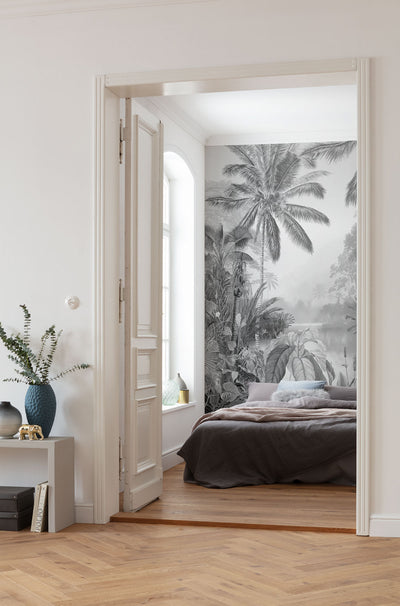
 In this image: Wilderness Mural Wallpaper
2. Why a stress-free home is non-negotiable?
We live in a world that is constantly "on." Between the pings of a smartphone and the sensory clutter of urban life, our nervous systems are being redlined. Your home is the only variable you can truly control in this equation. It shouldn't be just a place to store your things; it needs to be a nervous system regulator.The importance of a stress-free home goes beyond comfort—it’s about your biological ROI (Return on Investment). Constant environmental stress leads to:Elevated Cortisol: Higher levels of the "stress hormone" which can impair sleep and immune function.Decision Fatigue: A cluttered or poorly lit home forces your brain to work harder just to exist in the space.Sensory Overload: Artificial environments can leave us feeling "wired but tired," unable to transition into deep rest.By utilizing biophilic design, you aren't just "decorating"—you are creating a refuge. When your home mimics the calming patterns of nature, it signals to your parasympathetic nervous system that it is safe to downshift. This transition is what allows you to actually recover from your day, rather than just surviving it.
| Goal | Resulting Feeling | Scientific Benefit |
| Visual Order | Mental Clarity | Reduced cognitive load. |
| Natural Textures | Physical Grounding | Lowered heart rate and blood pressure. |
| Soft Lighting | Circadian Alignment | Improved melatonin production and sleep. |
Why do nature elements reduce stress
It’s easy to dismiss the calm of a forest walk as just a “vibe,” but it’s actually biological. When you feel tense in a stark, windowless space, your brain is reacting to a mismatch between what it evolved for and what it’s experiencing.
For roughly 99% of human history, we lived immersed in nature. Our survival depended on reading landscapes, for example spotting water, sensing shelter, tracking light. When those cues disappear and are replaced by static, artificial environments, your nervous system doesn’t fully relax. It stays in a subtle “scanning” mode, searching for signals of safety it recognizes.
That’s why natural elements act like a built-in stress regulator.
Modern life demands intense, directed attention—focusing on screens, tasks, and constant input. This drains your mental energy. Nature, on the other hand, engages what researchers call “soft fascination”: gentle, effortless attention captured by things like rustling leaves or wood grain. This allows your brain’s executive system to rest and recover.
There’s also something deeper happening in how we process visual patterns. Nature is full of fractals—repeating, organic structures like ferns, waves, or clouds. Our brains are wired to recognize these patterns easily, and when we do, they shift into a more relaxed state, producing alpha brain waves associated with calm and clarity. Compared to the sharp, irregular noise of many built environments, these patterns feel like a visual exhale.
At the same time, natural environments signal safety on an instinctive level. Open views combined with a sense of shelter, the presence of greenery and water, and the feel of real materials like wood or stone all tell your brain: resources are available, and you’re protected. These cues are subtle, but powerful.
And this isn’t just psychological, it’s also physiological. Adding natural elements to your space can lower cortisol, reduce heart rate and blood pressure, regulate your sleep cycle through light exposure, and even ease anxiety through scent and texture.
In other words, bringing nature indoors isn’t just an aesthetic choice. It’s a return to the conditions your nervous system understands. It tells your brain, quietly but clearly: you’re safe now, you can stop scanning, and finally rest.
3. Neuro-aesthetics design tips
The following tips aren't about decorating in the traditional sense, they are about sensory hacking. We are moving past what looks good on a mood board and focusing on what feels right to your nervous system. These are the practical, neuro-aesthetic shifts that tell your body it’s okay to finally drop its shoulders.
Natural light strategies and circadian rhythm
Natural light plays a vital role in regulating our circadian rhythm, which significantly affects our mood, energy, and overall well-being. To put it simply, your circadian rhythm is the pattern your body follows based on a 24-hour day — essentially, your body's internal clock. This rhythm tells your body when to sleep and when to wake up, but it also affects several other body processes, like your hormones, digestion and body temperature, as experts at the Cleveland Clinic explain. This rhythm is individual to each person, but it also changes based on age: babies, teenagers, and adults all have their own circadian rhythm. To best accommodate it, natural light becomes the main ally: it’s a true reflection of the day, and our very artificial lives rarely take this aspect into account. In fact, the National Institute of General Medical Sciences explains that light and dark have the biggest impact on circadian rhythm.
To harness natural light and create a stress-reducing home design according to neuro-aesthetics, consider these strategies:
1. Maximize daylight exposure: positioning windows and openings strategically can enhance daylight penetration. Large windows, skylights, and open floor plans can create a flow that brings light deep into your space. As for curtains, make sure you use natural materials that organically let more light into your home, and light colors for the same reason, such as our White Linen Curtains. You can find more ideas and tips on how to light spaces according to circadian rhythm here.
2. Use reflective surfaces: by incorporating mirrors and light-colored materials, you can amplify natural light and brighten dim corners of your home. Mirrors are also great when it comes to small spaces, as they create optical illusions that make rooms look bigger than they actually are. This not only creates a more inviting atmosphere but also contributes to a mood-lifting experience. An original stress-reducing home design solution in this sense can be our Bamboo Mirrors, with their fun yet calming shapes, and a natural wooden feel that brings warmth and elegance indoors.

3. Accommodate seasonal changes: the four seasons exist for a reason, as much as our corporate, constantly busy way of life has taught us the contrary. Spring is the season of renewal and growth (the actual natural start of the year), just like summer is the season of vitality and joy, whereas fall is a time for reflection and transition and the winter represents rest and renewal. It is not a case that natural light changes greatly throughout the seasons. As the experts at First Psychology explain, embracing the seasons can have profound benefits for our wellbeing. By aligning our lifestyles with the natural rhythms of the year, we can enhance mindfulness by being more present to nature, boost mental health through seasonal activities, improve physical health and foster connection thanks to seasonal traditions and gatherings.
To achieve this, consider dynamic lighting solutions that automatically adjust not just with the seasons, but with the stages of the day: soft, dim lights in the morning and in the evening to mimic the low light outside the windows, as few artificial lights as possible during the day, preferring natural daylight when it’s possible, and a special attention to colors: colder during the day, warmer at the beginning and end of it.
The stress-reducing impact of biophilic fractal patterns
Biophilic patterns echo nature, and this familiarity has a profound impact on our mental health. Fractal patterns—recurring, self-similar forms found throughout the natural world—such as the flowing lines of wood grain, the branching of trees, or the intricate veining in stone, subtly signal safety and harmony to the brain. Because humans evolved in environments rich with these patterns, our visual system processes them efficiently, requiring less cognitive effort and reducing mental fatigue. Research in neuro-aesthetics design suggests that exposure to fractal-rich environments can lower cortisol levels, slow heart rate, and induce a mild meditative state. This not only reduces stress but also improves sustained attention and supports creative thinking by allowing the mind to wander without becoming overwhelmed. Incorporating biophilic fractal patterns into interior spaces, through materials, textiles, artwork, or architectural details, can therefore create environments that feel both grounding and mentally restorative, enhancing overall well-being and productivity.

Tips for incorporating biophilic fractal patterns:
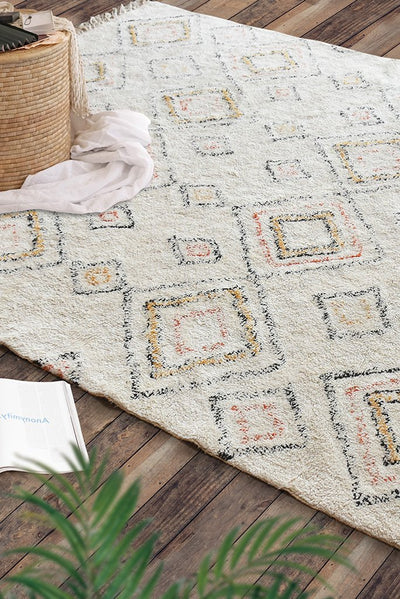
- Natural materials: Opt for wooden furniture, stone accents, or textiles that showcase organic patterns. These can serve as comforting focal points, bringing nature indoors.
- Wall art: Consider art pieces or murals featuring fractal designs, like our Untamed Mural Walllpaper. These not only add visual interest but also work to create a soothing atmosphere.
Optimizing air quality for cognitive health interiors
The quality of the air we breathe directly affects our cognitive functions, mood, and overall health. Poor indoor air—often filled with invisible pollutants like volatile organic compounds (VOCs), dust, and excess carbon dioxide—can lead to brain fog, fatigue, headaches, and reduced concentration among others. In contrast, clean, well-oxygenated spaces support sharper thinking and better decision-making, as well as improved emotional balance. Studies have recently discovered that humans function better cognitively in green buildings, specifically those with increased ventilation.

Here are our tips for air quality optimization and improved cognitive health interiors:
-
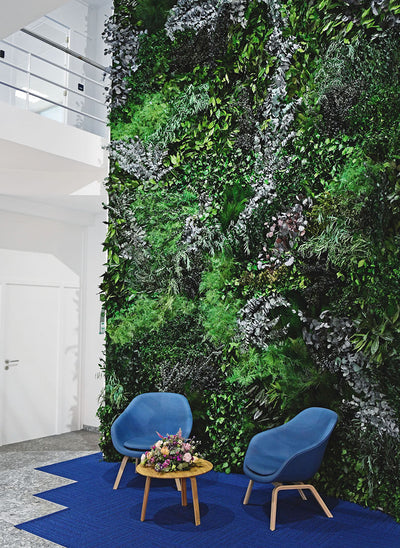
Indoor plants: incorporate a variety of houseplants to introduce natural filtration and humidity balance into your space. While their purifying impact is modest in typical indoor settings, plants like snake plants, pothos, and peace lilies contribute to a fresher atmosphere and provide psychological benefits that reduce stress and boost mood. Grouping plants strategically can also create calming, biophilic focal points that reinforce a sense of vitality. For a twist on "classic plants", explore our Preserved Plant Wall Art!
-
Ventilation: ensure consistent airflow by combining passive and active ventilation strategies. Opening windows regularly allows fresh air exchange, helping to dilute indoor pollutants and regulate carbon dioxide levels. In kitchens and bathrooms, use exhaust fans to remove moisture and airborne contaminants at the source. Cross-ventilation—opening windows on opposite sides of a space—can be especially effective in maintaining a steady flow of clean air.
-
Air quality monitors: investing in air quality monitoring devices empowers you to make informed decisions about your indoor environment. These tools track key indicators such as CO₂ levels, particulate matter (PM2.5), humidity, and VOCs. By understanding how daily activities—like cooking, cleaning, or even occupancy—affect air quality, you can respond proactively, whether by increasing ventilation, adjusting humidity, or introducing filtration systems.
Find more ways to improve your indoor air quality naturally here.
By weaving together biophilic design solutions such as natural light, fractal patterns, and air quality optimization, you create a harmonious living space that truly reflects the principles of neuro-aesthetics, improving your home for a better life experience.
Find more inspiration on stress-reducing interior design here.




Leave a comment