




When the days stretch out and the windows stay open longer, even our most-loved rooms can start to feel a little overdressed. Heavier throws, dense decor, lamps that worked beautifully in February — they collectively make a space feel closed-in just when our bodies are asking for the opposite. The good news is that a lighter home is rarely a redesign project. It is almost always a subtraction project, a light project, and a sensory project. Here is how to make your home feel fresher, lighter, and calmer for summer without changing the bones of anything.
Why some rooms feel heavy in summer
The same room can feel cocooning in January and oppressive in July, and the reason is almost always cumulative. Several quiet decisions add up: too many dark or dense objects, heavy fabrics still on the sofa, an overhead light doing more work than it should, surfaces that have collected small things over months, and synthetic textures that hold heat against the skin and against the eye.
None of these are problems on their own. The problem is the layering. Summer asks for fewer, lighter, and quieter cues — and our winter rooms simply have too many of them.
How can I make a space feel more open without buying everything new?
A more open room is not always a bigger room. Often, it is a room with fewer interruptions: fewer objects competing for attention, fewer dark corners, fewer blocked views, and fewer things pressing visually against the edges of the space.
Before thinking about new furniture or decor, look at how the room is asking the eye to move.
Can you see the floor?
Can daylight travel from the window into the room?
Is there one clear focal point, or are ten small things calling for attention at once?
Openness is created through flow — visual flow, physical flow, and light flow.
One of the easiest ways to make a space feel more open is to create breathing room around what you already own. Pull furniture slightly away from walls or windows. Clear the line of sight from the doorway. Let one wall or surface stay quieter than usual. In summer, this kind of editing can feel almost physical, as if the room has taken a deeper breath.
You do not need to replace everything. You need to help the room reveal more of itself.

Featuring our Iguazu Floor Lights made of environmentally friendly and renewable bamboo and jute, these designs are all about integrating more natural materials into our interiors to help us live a lighter and more sustainable lifestyle.
Start by removing visual weight
Before buying anything, do a small subtraction pass. Choose one surface — a console, a shelf, a coffee table — and clear it almost completely. Swap a heavy throw for something lighter or fold it away until autumn. Edit small decorative objects down to two or three you actually love. Let negative space do a little work for you.
This is the cheapest and fastest part of a summer refresh, and it also tends to be the most emotionally satisfying. Rooms that feel calmer often have less in them, not more.
Use light as a material
Lighting is the most underrated tool in seasonal styling. The Terrapin Bright Green report on the 14 Patterns of Biophilic Design identifies dynamic and diffuse light — the kind that shifts gently through the day — as one of the patterns most strongly linked to wellbeing in interior spaces.
For summer, this means letting daylight in cleanly and treating evening light with more care than usual:
- Keep window frames and sills visually open. Even pushing a piece of furniture six inches away from a window can change a room.
- Swap heavier drapery for sheer or lighter curtains that filter rather than block.
- Reflect light using pale walls, mirrors, glass, ceramics, and light woods. These are the materials that bounce daylight back into the room.
- Use softer table and wall lamps in the evening rather than the overhead light. The Blume, Garbazza and Spitschan review on the effects of light on human circadian rhythms, sleep and mood reminds us that evening light is not just decorative — it shapes how the body winds down.

An open living room featuring our Onna Wall Lights. These wall sconces cast a warm, upward glow that gently washes the wall, creating a calming ambiance in any space it inhabits.
What colors, textures, and materials make a room feel lighter?
The lightness of a room comes from a combination of what the eye sees and what the body imagines touching. A pale color can feel fresh, but if every surface is flat and synthetic, the room may still feel stiff. A natural material can feel warm, but if it is too dark or heavy for the season, it may visually weigh the room down.
The best summer palette is not just about color. It is about color plus texture plus material.
Think of the difference between a bright white plastic surface and a warm white linen curtain. Technically, both are light. But one can feel hard and reflective, while the other feels soft, breathable, and human. That is why natural textures matter so much in summer interiors: they soften pale colors and stop light rooms from feeling cold or unfinished.
For a lighter room, choose materials that seem to let air, light, or touch move through them: woven fibers, matte ceramics, pale woods, cotton, linen, rattan, bamboo, paper, jute, and stone-like finishes. These materials do not shout. They create a quiet background that makes the whole space feel calmer.
Choose textures that feel breathable
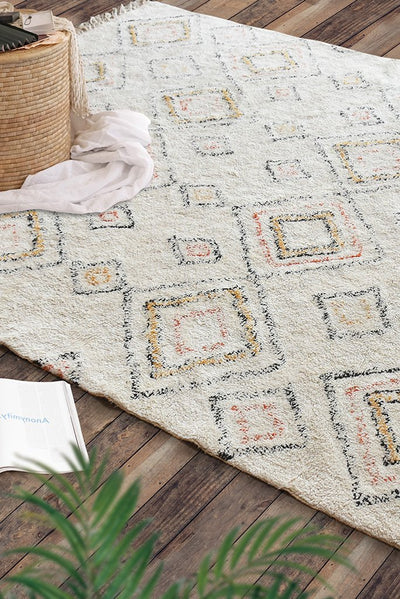
The summer-friendly material palette is short, and it works almost everywhere. Linen, cotton, bamboo, rattan, light woods, jute, paper and ceramic all share a quality that synthetic fabrics rarely have: they look as cool as they feel. A linen cushion cover instead of a velvet one, a rattan pendant in place of a metal shade, a jute rug layered under a small woven one — small swaps with a disproportionate effect.
If you want a deeper dive into how natural materials shape a space, our overview of materials that bring nature closer is a good starting point.

A beautiful bedroom featuring our charming linen curtains. Crafted from 100% linen, they offer cozy comfort and rustic beauty. The semi-sheer fabric gently diffuses light, creating a soothing ambiance.
Use a softer summer palette
A lighter palette does not mean a cold or bleached one. The colours that read as summery without feeling sterile are the ones that already exist in the natural world at this time of year: warm white, sand, pale clay, sage, soft blue, misty grey, light oak, and cream. Pick two or three to repeat across cushions, candles, and small ceramics rather than introducing them everywhere at once.
Research on restorative home environments suggests that interior characteristics can influence how mentally restorative a space feels — and palette is one of the easiest characteristics to adjust.
How do I make the room feel fresh but still warm and personal?
Freshness does not have to mean stripping the room of character. A room can feel lighter and still feel deeply lived-in — the key is to edit the weight, not the warmth.
The mistake many people make when trying to create a fresher space is removing too much personality. They take away color, texture, objects, pattern, and memory all at once. The result may look clean, but it can also feel flat. A truly fresh room still needs something human: a material with texture, a shape that feels organic, a color borrowed from nature, an object with a story, or a focal point that gives the eye somewhere soft to rest.
Instead of making the room more minimal, make it more intentional. Keep the pieces that carry warmth, meaning, or sensory pleasure, and give them more space around them. A ceramic lamp, a woven rug, a botanical print, a handmade object, or a plant-inspired wall piece will often feel more beautiful when the surrounding surfaces are quieter.
The balance is simple: remove what feels heavy, but keep what feels alive.
Add one nature-inspired focal point
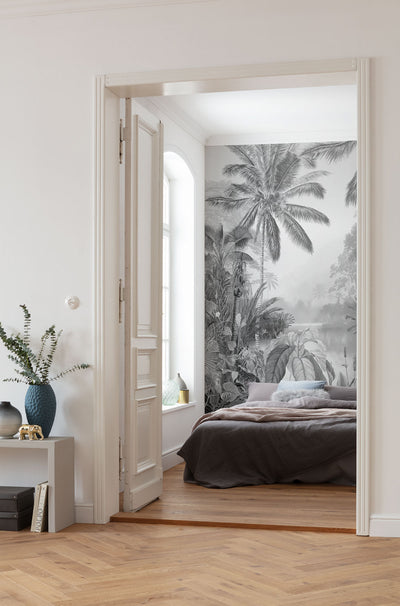
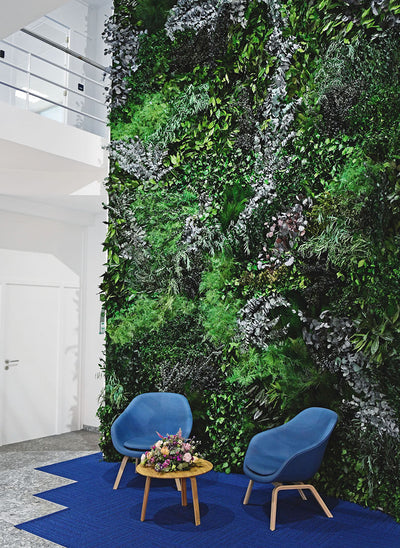
Lighter rooms can feel under-styled if there is nothing for the eye to land on. The fix is not more — it is one well-chosen focal piece that brings a hint of the outdoors inside. A panel of botanical mural wallpaper on a single wall, a piece of plant or moss wall art, a nature-inspired poster or canvas, a ceramic pendant light, a textured rug, or an organic-shaped mirror are all anchor pieces. One is usually enough.

A living room that features nature inspired focal points with plant and moss wall art.
What small changes make the biggest difference?
When a room feels heavy, it is tempting to think the solution has to be dramatic: repainting, replacing the sofa, changing the rug, ordering all new decor. But most rooms shift because of smaller decisions repeated in the right places.
The biggest changes are usually the ones that affect how the room feels immediately: light, clutter, texture, scent, and what the eye lands on first.
A single warmer bulb can change the mood of an evening. Clearing one table can make the whole room feel calmer. Moving a chair away from a window can bring daylight deeper into the space. Replacing one dense cushion with a linen one can make a sofa feel more summery. Adding one branch, plant, botanical print, or ceramic object can bring in the nature cue the room was missing.
Think of it less as decorating and more as adjusting the room’s signals. What is it currently telling your body? Is it saying heavy, crowded, dim, and closed? Or light, breathable, soft, and easy?
Small changes work because they are the cues we live with every day.
The quick summer reset checklist
A summer refresh does not need to announce itself. It can be almost invisible: the window feels clearer, the sofa feels less dressed, the evening light feels softer, the table has space for a glass of water and a book. These are small changes, but they change how the room receives you.
The goal is not to make the home look styled for summer. The goal is to make it feel easier to live in during summer.
If you want to do this in one afternoon, follow these six moves in any room:
- Remove one layer (a throw, a heavy curtain, a winter cushion).
- Open one view — clear what is in front of a window.
- Add one natural texture you can touch.
- Soften one light source — switch a harsh bulb for a warm low one, or move from overhead to lamp.
- Create one uncluttered surface.
- Bring one nature cue into the room — a plant, a botanical print, a stem in a vase.
Six small changes are usually enough to make a room feel like it has exhaled.

Bring in warm glow with low hanging ceramic lights. Featuring our Vora Ceramic Hanging lights.
Pieces to help your home feel lighter
If you are looking to add rather than only edit, these are the categories that do the heaviest lifting for a summer reset:
- Light rugs, cushions and linen textiles in pale, breathable fibres.
- Ceramic and natural lighting for softer evening glow.
- Botanical wallpapers for a single feature wall.
- Plant wall art and preserved greens as a nature focal point.
- Nature-inspired canvas prints if you prefer flat wall art.
A lighter home is not an emptier home. It is a home with more air around the things you love — and that, more than any single product, is what makes a room feel like summer.
Forest Homes designs interiors with biophilic and sustainable principles. Explore our biophilic design approach or our full collection to start your summer refresh.




Leave a comment