




In an era defined by the rapid acceleration of digital consumption and the relentless turnover of "aesthetic" cycles, the contemporary home is reclaiming its status as a permanent anchor. The shift toward the anti-trend interior represents a profound rejection of disposable "Dopamine decor" in favor of what experts term "Heirloom dopamine"—a lasting emotional resonance found in objects of substance, history, and material integrity. By synthesizing neuroaesthetic principles with the psychology of craftsmanship, designers and homeowners are now prioritizing heirloom quality decor that supports long-term mental well-being and ecological health. This report explores how the curation of meaningful home objects and the embrace of natural craftsmanship are redefining the concept of luxury, transforming living spaces into soulful spaces that transcend the ephemeral nature of the market.
The evolution of interior design in 2025 and 2026 is marked by a decisive pivot from the "Instagram-ready" perfection of previous years toward a more nuanced, "lived-in" sensibility. As the psychological toll of digital burnout becomes increasingly evident, there is a burgeoning demand for environments that offer low-stimulation, sensory-rich experiences rooted in biophilia. The anti-trend movement is not merely a stylistic preference but an intelligent response to the commodification of individuality and the environmental crisis. It emphasizes the "Forever Home" as an investment, where durability and provenance are the ultimate benchmarks of value. Through a rigorous analysis of published research, designer philosophies, and neurobiological data, this article provides a framework for understanding why the brain craves the handcrafted and how to implement a design strategy that fosters lasting joy.
Index
- What is the anti trend movement and heirloom dopamine?
- What is neuro-aesthetics and why does biology prefer craft
- The therapeutic power of the handmade
- Provenance and the extended self: The psychological value of meaningful objects
- Material intelligence: Wood stone and the language of textures
- Designing for the nervous system: Lighting, sound and sanctuary
- The economics and ecology of heritage quality
- Case studies in permanent style: Wearstler-Berkus and the path forward
- Final thoughts: The bottom line for wellbeing-and-finance
What is the anti-trend movement and heirloom dopamine?
The term "anti-trend" has emerged in 2025 as the defining ethos for high-end residential interiors. It signifies a movement away from the "prescriptive" nature of design, the idea that a space must be gray and white to be marketable, and toward an "emotionally intelligent" environment that reflects the inhabitant's personal story.
While traditional dopamine decor relied on bright colors and whimsical shapes to provide a quick "hit" of happiness, the anti-trend approach seeks a more sustainable emotional reward. This is conceptualized as "heirloom dopamine," where the joy of a piece is derived from its quality, its maker's intent, and its potential to be passed down through generations.
The shift from fast trends to lived-in luxury
Data from search engines and social media indicates a 25% decrease in the popularity of "Quiet Luxury" as of late 2024, as the aesthetic began to feel too uniform and restrictive. In its place, 2025 has seen the rise of "Lived-in Luxury," which prioritizes character and comfort over polished perfection. Designers are observing that clients are "collectively craving homes with heart"—spaces that feel layered, idiosyncratic, and full of personality. This transition is supported by a growing awareness of "conscious consumerism," where the focus shifts from quantity to the acquisition of bespoke decorative elements that have a personal narrative.
| Design Era | Primary Focus | Key Materials | Aesthetic Outcome |
| Fast Trend (2010s-2020s) | Viral aesthetics, mass-market appeal | Synthetic fibers, laminate, quartz | "Showroom" look, Millennial Gray |
| Dopamine Decor (Early 2020s) | Immediate mood boost, playfulness | Acrylic, plastic, saturated paints | High-contrast, maximalist, whimsical |
| Anti-Trend (2025-2026+) | Longevity, emotional resonance | Solid wood, natural stone, handmade ceramics | Lived-in, soulful, heirloom-quality |
The anti-trend interior is also defined by its "slow aesthetics," a trend identified at the ELLE Decoration Awards 2025 as the leading movement of the year. Slow design promotes mindful creation, emphasizing individual, social, and environmental well-being by choosing timeless forms and noble materials that stand the test of time. This philosophy encourages homeowners to ask critical questions before any acquisition: "Do I really need this? Will I like it in ten years? Where does it come from?".
The psychology of trend fatigue
The relentless influx of algorithmic marketing has led to a state of "righteous fed-up-ness" among consumers. This psychological exhaustion from the "new and now" has fueled a rebellion against trends that are designed purely to sell more goods. Nate Berkus, a prominent voice in the anti-trend movement, argues that a home should not have a "timestamp" but should instead be a "refuge of collected experiences". This requires a shift in mindset: moving from the role of a consumer to that of a curator who prioritizes meaningful home objects over fashionable ones.
What is neuroaesthetics? Why does biology prefer craft?
Neuroaesthetics is the multidisciplinary study of how the brain and body respond to beauty, nature, and design. It provides the scientific validation that designers have long intuited: that our environments trigger measurable biological outcomes. Research reveals that 95% of brain activity is unconscious, and first impressions of a space are formed in less than four seconds. When a space is designed using anti-trend principles—focusing on biophilic patterns and natural craftsmanship—the biological response is overwhelmingly positive.
Biological responses to fine design and nature

In this picture: Pear Drops Mural Wallpaper
When the human brain perceives beauty and natural order, it triggers a cascade of physiological changes. fMRI and PET scans show increased activity in neural circuits linked to pleasure and motivation, including the release of dopamine and serotonin. Conversely, stress markers like cortisol can decrease by 15-20% when a person is in an environment that satisfies evolutionary needs for safety and biophilic connection.
| Biological Marker | Response to Thoughtful/Natural Design | Impact on Long-term Health |
| Cortisol | Significant Decrease (15-20%) | Improved immune function, lower chronic stress |
| Heart Rate | Slower, more rhythmic | Reduced risk of cardiovascular disease |
| Blood Pressure | Lowering of systemic pressure | Enhanced recovery and metabolic health |
| Serotonin/Dopamine | Increased release | Improved mood regulation and life satisfaction |
| Brain Plasticity | Consolidation of positive circuits | Slower cognitive decline and enhanced focus |
These responses are consistent across populations because they are encoded in human DNA through millions of years of evolution in nature. A home that incorporates natural textures and organic patterns is not just an aesthetic choice; it is a "biological necessity" that moves the body into a restorative parasympathetic "rest and digest" state.
Fractal fluency and the stress of the sterile
One of the most critical concepts in neuroarchitecture is "Fractal fluency." Fractals are self-similar, repeating patterns found in tree branches, clouds, and stones. Professor Richard Taylor notes that humans have evolved to process these patterns with extreme efficiency, a phenomenon called fractal fluency. When interiors are overly sterile or filled with sharp, man-made geometries, the brain must "work harder" to interpret the environment, leading to subconscious stress and cognitive fatigue.
Handcrafted objects, such as hand-thrown ceramics and custom wood furniture, inherently possess these natural fractals. The "imperfect" edges of a stone tray or the varied grain of a solid oak table provide the brain with the complex, non-repeating data it craves. This is why heirloom quality decor is fundamentally more calming than mass-produced, symmetrical items; it aligns with the "ancient brain's" expectations of the natural world.
The therapeutic power of the handmade
The connection between mental health and the creation or possession of handmade products is explored through "craft psychology". This field supports the theory that crafting has profound effects on physical and mental health, reducing blood pressure, diverting focus from chronic pain, and stimulating neuroplasticity.
The eudaimonic well-being of craft
Research published in Frontiers in Public Health in 2024 demonstrates that carrying out creative activities such as arts and crafts is as beneficial to mental well-being as having a job. This study found that crafting predicts a stronger sense that "life is worthwhile," with an impact larger than that of employment status. This is linked to "eudaimonic" well-being—the fulfillment that comes from realizing one's potential and expressing one's true nature—as opposed to "hedonic" well-being, which focuses on short-term pleasure.

The "handmade effect" suggests that consumers value handcrafted items because they perceive them to contain the "love" and "essence" of the maker. This symbolic attachment transforms a piece of furniture from a utility into a companion. In the context of anti-trend design, these pieces act as "transformational objects" that gain significance over time, especially as they are used and eventually passed down.
Craft as an antidote to digital slickness
In an increasingly computerized society, handmade crafts serve as a reminder of the personalization and human touch that are decreasing in number. The act of working with one's hands stimulates mental development and fosters a sense of pride and accomplishment. For the inhabitant, the tactile presence of hand-carved wood or hand-knotted textiles provides a "grounding" effect that counterbalances the "digital slickness" of modern technology. This is why the anti-trend movement emphasizes "natural craftsmanship" as a core pillar: it reconnects us with the material world in a way that mass production cannot replicate.
Provenance and the extended self: The psychological value of meaningful objects
The concept of "provenance"—the history of an object's ownership and its origin—is central to the curation of an anti-trend home. Curating meaningful home objects allows an individual to create a space that is an extension of their identity and a testament to their life story.
Heirlooms and identity formation
Possessions are central to how we see ourselves and how others see us. Psychologist Russell Belk's theory of the "extended self" suggests that we use objects to signal where we want to belong and who we want to be. Heirlooms, in particular, carry the memory and essence of those who owned them previously, creating a sense of intergenerational continuity.
| Object Type | Psychological Function | Benefit to Inhabitant |
| Heirlooms | Mnemonic anchor, legacy |
Sense of belonging, continuity |
| Travel Relics | Narrative storytelling |
Connection to global experiences |
| Artisanal Pieces | Aesthetic triad interaction |
Stimulation of sensory-motor and emotional networks |
| Custom Furniture | Personalization, autonomy |
High psychological ownership, life satisfaction |
Research indicates that children as young as four years old develop a preference for items that are handmade or have a specific history, often valuing them more than identical factory-made items. This highlights a deep-seated human need for objects that possess "non-visible properties," such as the love and effort invested by the maker.
The "dissolving caterpillar" and mindful decluttering
To make room for heirloom quality decor, many experts recommend a shift in how we approach decluttering. The "dissolving caterpillar" method encourages individuals to shed old patterns and possessions that no longer serve their true selves, rather than just "getting rid of stuff". This mindful editing allows the remaining objects—the ones that truly "spark joy"—to shine. As interior designer Emily Janak suggests, framing personal items like sketches or notes is a way to instantly improve the emotional atmosphere of a home, turning everyday moments into "conversation pieces".
Material intelligence: Wood, stone, and the language of textures
The materiality of a home is the primary interface through which we experience our environment. The anti-trend interior prioritizes "Natural Textures"—wood, stone, clay, and plant-based textiles—because they improve sensory comfort and absorb sound, aligning with biophilic principles.
The reassuring touch of solid wood
Solid wood is a staple of the "forever home" because it is strong, durable, and repairable. Unlike particleboard or laminate, which degrade and are landfill-bound within a few years, custom wood furniture can be re-sanded and re-oiled for decades. From a biological perspective, wood has a documented stress-reducing effect. Its organic grain "reads like a map," providing a tactile connection that grounds the inhabitant in the present moment.

Statement stones and "stone drenching"
In 2025-2026, designers are moving beyond the safe choices of the past. "Statement Stones" with bold veining—such as viola marble or emerald quartzite—are being used across the home in built-ins, cabinetry, and sculptural furniture. This "stone drenching" adds tactile richness and a sense of permanence to a room. Natural stone is "cool to the touch" and offers a level of durability that synthetic countertops cannot match.
Natural fabrics and acoustic Comfort
Textiles such as linen, hemp, and wool are essential for adding "emotional depth" to a space. These fibers are breathable, hypoallergenic, and free from the harmful off-gassing associated with synthetic materials. Furthermore, they play a critical role in "acoustic comfort". In modern, open-plan homes, natural textiles—along side wood panels and moss art—help manage noise by absorbing sound waves, thereby reducing distractions and promoting focus.
Designing for the nervous system: Lighting, sound, and sanctuary
A key tenet of anti-trend design is "Designing for the Nervous System". This involves understanding how environmental cues like light, sound, and enclosure impact our emotional state, particularly during different seasons.
Circadian lighting and the "pools of safety"
Lighting is the primary signal for the internal biological clock. Cool, bright light in the morning signals alertness, while warm, dimming light in the evening cues the body to wind down. To avoid harsh, "dysregulating" environments, designers recommend moving away from single overhead sources and instead focusing on layered, warm light. Creating "pools of safety"—localized light near reading chairs or bedside tables—allows for necessary darker zones that signal the nervous system to relax.
The "prospect and refuge" theory
Humans feel most at ease in environments that provide both a clear view of their surroundings ("prospect") and a sense of safety or enclosure ("refuge"). A window seat is a classic example of satisfying this ancient evolutionary need, as it offers a protected spot to observe the landscape, reducing stress and improving mental clarity. In the anti-trend home, creating these "Pockets of Sanctuary" is essential for restoration.
Biophilic patterns for urban well-being
For those living in dense urban settings, implementing biophilic design is a way to "repair the fracture" between cities and nature. This can be achieved through both direct and indirect experiences:
-
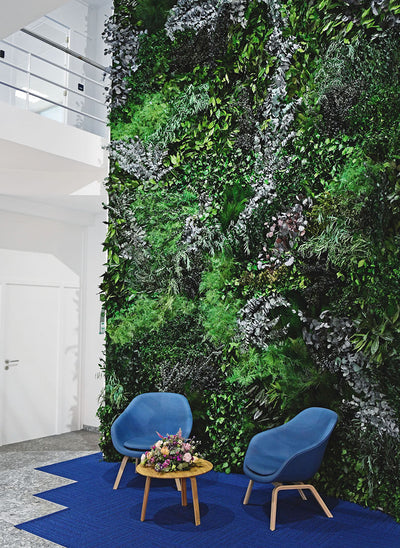
Direct experience: Incorporating indoor plants, living green walls, and maximizing natural light.
-
Indirect experience: Using biomorphic forms, natural colors (terracotta, moss green), and materials that reflect the local ecology.
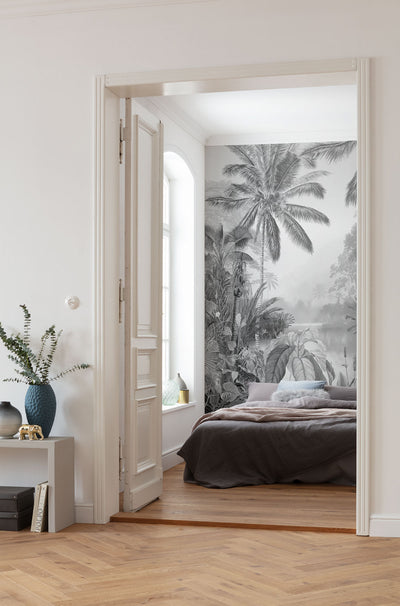
Research shows that even viewing images of nature or using nature-inspired wallpaper, such as the Untamed Mural Wallpaper, can trigger the release of pleasure receptors in the brain, leading to faster stress recovery.

The economics and ecology of heritage quality
Choosing investment decor is as much a financial decision as it is a sustainable one. The "True Cost of Fast Furniture" includes not only the rapid replacement cycle but also the environmental impact of non-recyclable materials and high-carbon shipping.
Sustainability and the circular economy
Heirloom quality decor is the cornerstone of the "Circular Economy". Reclaimed teak tables or salvaging wood from storm-fallen lots keeps valuable carbon-storing materials in circulation rather than in landfills. Furthermore, handcrafted pieces are often produced with "Clean Labels"—using non-toxic, low-VOC finishes that ensure healthy indoor air quality.
| Sustainability Metric | Heirloom / Artisan Product | Mass-Market Product |
| Service Life | 50+ years (repairable) |
3-7 years (planned obsolescence) |
| Chemical Safety | Low-VOC, non-toxic inks |
Formaldehyde ($CH_2O$), phthalates |
| Material Origin | Responsibly sourced, local |
Often from high-deforestation zones |
| Long-term Value | Retains/increases value |
Depreciates to zero quickly |
Financial benefits of biophilic design
Integrating biophilic elements—such as natural craftsmanship and greenery—can have measurable financial benefits. Research indicates that homes with access to nature and high-quality natural materials can command a property price increase of 4-5%. In commercial or retail settings, the presence of vegetation has been found to increase rental rates and customer willingness to pay 8-12% more for goods. For the homeowner, the longevity of heirloom pieces means fewer replacements over a lifetime, saving significant capital over the long term.
Case studies in permanent style: Wearstler, Berkus, and the path forward
Looking to industry leaders provides a practical blueprint for creating an anti-trend interior that feels both modern and timeless.
Kelly Wearstler’s sculptural naturalism
Kelly Wearstler has recently emphasized "sculptural furniture" that blurs the line between art and function. Her Echoes in Wood collection, crafted from reclaimed Douglas Fir, is a masterclass in how "earthy, rhythmic, and alive" furniture can transform a room. By using a jeweler’s attention to detail and a modernist’s understanding of scale, Wearstler creates environments that feel classic yet excitingly modern, prioritizing craft over mass-market production.
The Berkus-Brent "collected" philosophy
Nate Berkus and Jeremiah Brent advocate for a "Collected Living" approach that rejects the "prescriptive" nature of trends. Berkus emphasizes that a home should be a "story of who you are and a collection of what you love". Jeremiah Brent, recently of Queer Eye, has pioneered the idea that "personalization is the ultimate trend," encouraging clients to buy pieces that "make them feel something". Their projects often feature a mix of antiques, handmade pieces, and contemporary elements, creating a "soulful middle path" between minimalism and maximalism.

In this picture: White Linen Duvet Cover Set
Real-Life application: The Texas pasture transformation
A compelling example of the anti-trend philosophy in action is the transformation of a bare Texas pasture by Angela. Lacking natural shade and vertical greenery, Angela used biophilic design to "bring the outdoors in". By layering earthy tones, natural textures, and a forest-inspired mural—the Bois Brumeux Mural—she created a restorative sanctuary that compensated for the barren exterior. Her approach emphasizes the importance of choosing designs that "bring happiness" rather than following a standard showroom grid.
Final Thoughts: The Bottom Line for Wellbeing and Finance
The transition to an anti-trend interior is a commitment to a higher quality of life. By focusing on "Heirloom Dopamine" and investing in heirloom quality decor, individuals are creating homes that are biologically restorative, psychologically grounding, and financially sound. The integration of natural craftsmanship and meaningful home objects ensures that a space evolves with its inhabitants, gaining beauty and story over time.
As we look toward 2026, the movement for "Slow Living" and "Lived-in Luxury" will continue to gain momentum. The goal is to build a home that is a "refuge for healing, recharging, and reconnecting with essentials". This is achieved not through the pursuit of the "new and now," but through the careful curation of pieces that matter—those that reflect our history and support our future.
Ready to anchor your home in lasting joy? Discover the Natural Textures Collection at Forest Homes and begin your journey toward a more soulful, biophilic life. Explore the full range of sustainable interiors here.




Leave a comment