




As the boundary between work, rest, and play continues to dissolve in our hybrid world, the "soundscape" of our homes has become as critical as the floor plan. The shift toward acoustic comfort home design represents a move away from the hollow, echo-prone minimalism of the past toward "Acoustic wellness"—a sensory-driven approach that uses natural materials to dampen noise and foster mental clarity. By integrating high-performance elements like wood acoustic panels and hand-knotted textiles, homeowners are transforming noisy, open-plan spaces into refined sanctuaries. This article explores the science of residential sound and provides a blueprint for mastering your home’s auditory environment using sustainable, biophilic solutions.
The contemporary home is no longer just a place to sleep; it is a high-functioning ecosystem where video calls, kitchen clatter, and family life often collide in a cacophony of sound. Research indicates that poor acoustics don't just cause irritation—they increase cognitive load, elevate cortisol levels, and disrupt working memory. In response, the 2025-2026 design landscape is pivoting toward "silent architecture," emphasizing natural sound dampening through materials that "breathe" silence. From the trend of specialized "Listening Rooms" to the rise of focus zone design, mastering your home's soundscape is the next frontier of interior wellbeing.
Index
- The science of acoustic comfort and concentration
- Material intelligence: How wood, wool and linen manage noise
- Strategic focus zone design: Mapping your home soundscape
- The aesthetic of silence: Acoustic decor as high art
- Acoustic wellness and the listening room trend
- Final thoughts: The bottom line for sound and soul
The science of acoustic comfort and concentration
In scientific terms, acoustic comfort home design is the perceived state of satisfaction with the auditory conditions in an environment. For decades, residential design focused on the "visual triad"—color, form, and light—while sound was treated as an afterthought. However, neuroaesthetics research reveals that the brain forms an impression of a space's "feel" in less than four seconds, and much of that feeling is driven by how sound behaves within the walls.
The cost of the "echo chamber"
Modern architecture, with its love for glass walls, bare floors, and open layouts, has inadvertently created "echo chambers" where sound waves bounce relentlessly off hard surfaces. This phenomenon, known as high reverberation time, forces the brain to work harder to filter out background noise, leading to what experts call "cognitive fatigue."
| Acoustic Metric | Impact on Resident | Ideal Residential Range |
| Reverberation Time | High echo leads to stress and miscommunication | 0.3 - 0.6 seconds |
| Ambient Noise | Background "hum" disrupts deep focus | 35 - 45 dB |
| Speech Clarity | Distorted voices cause social strain | 80% intelligibility |
Studies show that office workers lose up to 86 minutes per day due to auditory distractions—a statistic that translates directly to the home office. When acoustic comfort home principles are ignored, the result is an environment that keeps the nervous system in a "fight or flight" state, rather than the "rest and digest" state necessary for recovery.
Material intelligence: How wood, wool, and linen manage noise

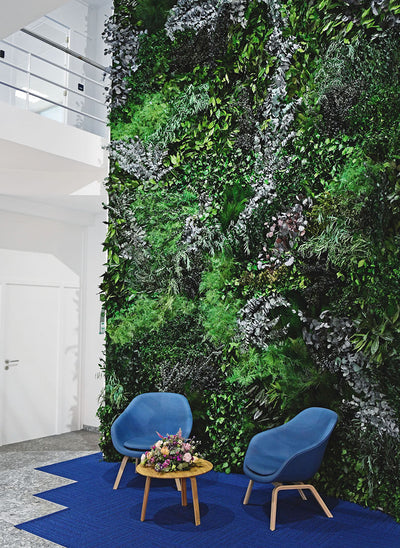
Integrating moss wall solutions like our Framed series and natural textiles.
The most effective way to achieve noise reduction interiors is through the strategic use of porous, natural materials. Unlike synthetic foams, natural fibers like wool and wood possess complex, irregular structures that naturally trap sound waves and convert them into tiny amounts of heat energy.
Wood acoustic panels: Warmth meets performance
Wood acoustic panels are a favorite among designers like Nate Berkus, who advocates for homes that feel "collected" and "refuges of experience." These panels often feature a slatted or perforated timber face backed by an acoustic substrate like mineral wool or recycled PET felt.
-
Diffusion: The slats scatter sound waves, preventing harsh "flutter echoes."
-
Absorption: The porous backing "soaks up" excess energy, particularly in the mid-range frequencies where human speech resides.
The power of wool and linen
Textiles are the unsung heroes of natural sound dampening. Sheep’s wool, in particular, is a high-performance acoustic material. Research published in PMC notes that thicker felts made from local wool can achieve a Noise Reduction Coefficient (NRC) of 0.4, comparable to commercial ceiling tiles.

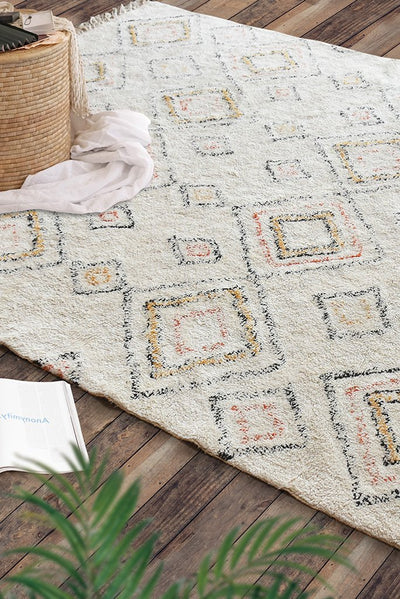
Investing in thick natural fabrics like the Elburg NZ Wool Rug is a foundational step in creating acoustic comfort at home.
Moss art: The "living" sound absorber
One of the most innovative trends in acoustic comfort home design is the use of preserved moss wall art. Moss has an intricate, soft structure that is exceptionally effective at absorbing sound waves. With an absorption coefficient often reaching 0.9 (where 1.0 is perfect absorption), moss installations are more than just biophilic decor—they are powerful health tools that "absorb stress" alongside noise.
Strategic focus zone design: Mapping your home's soundscape
To master your home's acoustics, you must move away from a "one-size-fits-all" approach. Instead, designers recommend "Acoustic Zoning"—creating distinct auditory environments for different activities.
Focus zones (Home Office)
For focus zone design, the goal is "Speech Privacy" and minimal distraction.
-
The Strategy: Place wood acoustic panels on the wall facing your main noise source (usually the door or window). Use natural textures to create a visual and auditory barrier if your office is part of a larger room.
-
The Result: Improved memory retention and task accuracy by 20-30%.
Communal zones (Kitchen & living room)
In open-plan kitchens, the clatter of dishes and the hum of appliances can quickly become overwhelming.
-
The Strategy: Integrate woods like solid oak stools and thick linen runners. These materials help dampen the sharp, high-frequency "clink" of ceramics and metal.
-
The Benefit: Balanced soundscapes that support clear, natural conversation without the need to raise one's voice.
The aesthetic of silence: Acoustic decor as high art
The beauty of 2025's acoustic trends is that they no longer look "industrial." Designers are embracing "Acoustic Decor"—elements that serve a technical purpose but are indistinguishable from high-end art.
-
3D Textured Panels: These add sculptural interest and superior sound dispersion to flat walls, perfect for minimalist living rooms.
-
Printed Acoustic Art: High-performance panels can now be printed with botanical illustrations or abstract photography, acting as a focal point while silencing the room.
-
Natural Screens: Using rattan, wicker, or bamboo dividers allows light to flow through while breaking up sound transmission paths.
As Jeremiah Brent suggests, "Good design is not meant to sit still—it's meant to be lived with." Integrating sound-absorbing art allows you to live in a space that is as quiet as it is beautiful.
Acoustic wellness and the "listening room" trend
Elle Decor identified "Listening rooms" as a defining trend for 2025. These are spaces dedicated entirely to high-quality audio—bespoke turntables, impressive record collections, and, crucially, perfect acoustics.
A listening room is the ultimate expression of acoustic comfort home design. It emphasizes the "vibrational qualities" of a space, using organic materials like clay, adobe, and bamboo to create an environment that "resonates with the human body." Whether it’s a dedicated room or a curated corner, these areas provide a much-needed "Analogue Refuge" from digital overload.

Office with our Framed Moss wall art.
Final thoughts: The bottom line for sound and soul
Mastering your home's soundscape is not just about silencing noise; it is about "Acoustic Wellness"—the intentional creation of environments that support your cognitive and emotional health. By choosing natural sound dampening materials like wood, wool, and moss, you are investing in a home that is both biologically restorative and functionally superior.
As we look toward 2026, the movement for "Silent Architecture" will continue to grow. The most successful homes will be those that treat sound as a primary design material, ensuring that every room is a "sanctuary of calm and clarity."
Ready to silence the noise and reclaim your focus? Explore the natural textures at Forest Homes and start building your auditory sanctuary today. For more inspiration on creating healthy interiors, learn about creating earthy interiors here and the 3 key principles of biophilic design here.




Leave a comment