




Autumn warmth is sensory depth, not visual mass. The trick to a cosy autumn home is not to "do autumn" — pulling out every cushion, every throw, every burnt-orange thing — but to add warmth in light, texture, scent and a couple of grounded tones. This guide breaks down how to make your home warmer for autumn without turning it into a Pinterest cliché, with field notes from designers like Beata Heuman, Norm Architects and Joseph Dirand.

As the days turn inward, the home starts to matter differently. Evenings begin earlier, more of life happens indoors, and the body asks for something it did not need much in July — warmth, grounding, layering, slower light.
The temptation is to "do autumn" — to pull out every cushion in burnt orange, every throw, every leaf-shaped candle holder. The more elegant path, and the one most contemporary designers take, is to add sensory depth, not visual mass. Warmth does not mean clutter. It means light, ground, texture, scent, and one or two deeper tones woven in deliberately.
Below: a plain-English guide to making your home warmer for autumn, with the small moves designers actually make.
In this article
- What actually makes a home feel warm?
- Start with light, not decor
- Add softness underfoot
- Layer texture instead of clutter
- Move from bright to grounded colours
- Use scent to mark the season
- Create one evening corner
- Make the bedroom and living room autumn-ready
- The autumn warmth checklist
What actually makes a home feel warm?
Three things, in order: light, texture, and one or two grounded tones. Almost everything else is window-dressing. The reason your favourite cosy hotel feels warm at 8pm in October — whether it is Aman Kyoto, The Newt in Somerset, or a small inn in the Cotswolds — is that those three layers have been considered, and the rest of the room has been left quiet.
The fastest way to make a room read as cold in autumn is to overlight it. The second fastest is to fill it with the wrong textures. The third is to chase an "autumn palette" with no warm materials underneath. The fixes are inverse.
Start with light, not decor
Cosiness is a lighting decision before it is a styling decision. The Blume, Garbazza and Spitschan review on light and human circadian rhythms, sleep and mood reminds us that warm evening light is one of the most powerful environmental cues for winding down — and autumn evenings make this lever twice as effective. Oxford circadian neuroscientist Russell Foster has been blunt in interviews: cool, bright light at 9pm tells your body it is still morning. Warm low light tells it the day is closing.
Do this before anything else:
- Switch to warm bulbs (around 2200–2700K).
- Use lamps rather than the overhead after sunset.
- Add wall lights for a soft perimeter glow.
- Create low-light zones — a corner, a reading nook — rather than lighting the whole room evenly.
- Introduce candlelight or a candle-style bulb where you spend the most evening time.
- Add a small bedside or reading light if you do not have one.

Add softness underfoot
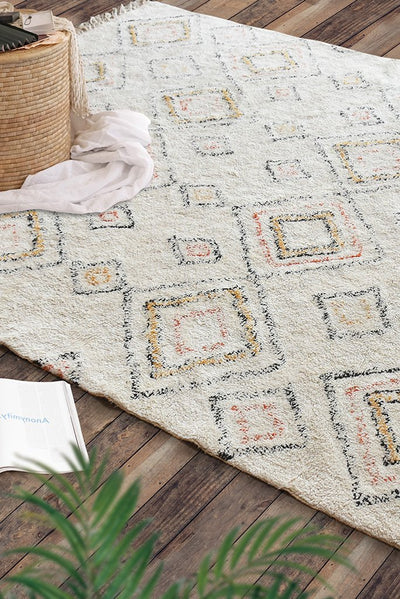
A rug does more work than almost anything else you can buy for autumn. It warms the room visually, warms the room thermally, absorbs the sharper acoustics that make a space feel exposed when the heating clicks on, and grounds the eye. In a small flat with hard floors, a single well-sized rug can transform a room. Browse our textiles collection for rugs in natural fibres.
Layer texture instead of clutter
The autumn material palette is rich rather than busy. The key principle: fewer pieces, richer materials. The textures that consistently signal autumn without overcrowding a room:
- Wool
- Linen
- Cotton
- Bouclé
- Velvet (used sparingly)
- Jute
- Wood
- Ceramic
- Brass
- Clay
One throw in wool, one cushion in bouclé, a ceramic vase, a wooden tray, and a jute rug already give a room enough sensory depth for the season. This is the discipline behind Joseph Dirand's warmly minimalist Parisian interiors and Norm Architects' Copenhagen projects — both built around the idea that richer materials let you keep the room quieter.

Move from bright to grounded colours
Autumn colour is not about turning everything dark. It is about replacing the high-noon palette of summer with something more grounded. The University of Bologna study on interior colour found that colour influences mood and even cognitive function over time, so it is worth being deliberate.
The autumn palette that consistently works:
- Moss green
- Olive
- Clay
- Ochre
- Chestnut
- Warm beige
- Deep blue
- Terracotta
- Forest green
- Mushroom grey
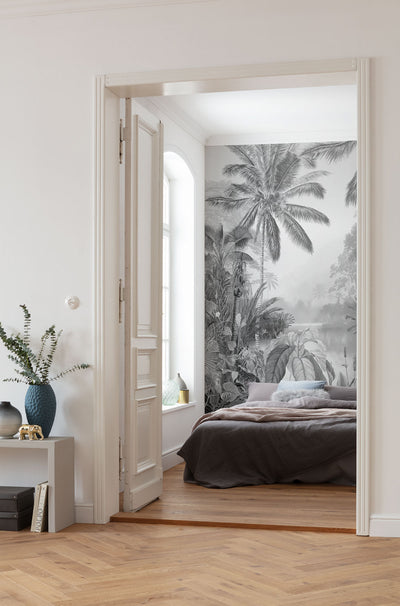
You do not need to repaint. A cushion, a throw, a piece of canvas art, or a new wallpaper panel introduces the season without redecorating it.
Use scent to mark the season
Scent is the fastest way to tell the body the season has changed. A 2025 study on sensory design with scent shows how strongly ambient indoor smells affect mood and physiological response. Autumn scent leans into warmer notes:
- Cedar
- Pine
- Fig
- Amber
- Herbal notes
- Wood smoke
- Citrus and spice, used subtly

Create one evening corner
Instead of redecorating an entire room, build one perfect corner. This is the cheapest, most repeatable design move in autumn:
- A comfortable reading chair.
- A warm lamp.
- A small rug.
- A cushion and a throw.
- A side table for tea or a book.
- A scent.
- One piece of art or a plant element.
One corner like this can carry the whole emotional tone of the season — and it scales down to a smaller flat far better than "redoing the whole living room."

Make the bedroom and living room autumn-ready
Bedroom
- A warmer bedside light.
- Layered bedding — a heavier duvet, an extra throw at the foot.
- A rug beside the bed.
- A calming bedtime scent.
- Less visual noise — fewer objects on bedside tables.
- Natural tones — moss, sand, clay — across the bedding palette.
Living room
- Soft, layered sofa textures.
- Better lighting — multiple lamps at different heights.
- A larger or warmer-toned rug.
- One wall light to glow at eye level.
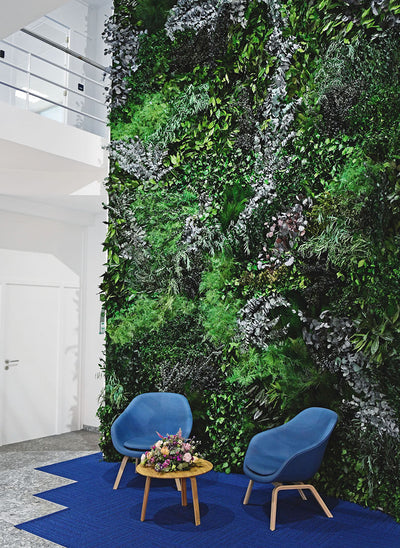
- A natural focal point — plant or moss wall art, a botanical canvas.
- Softer acoustics — curtains, rugs, plants.
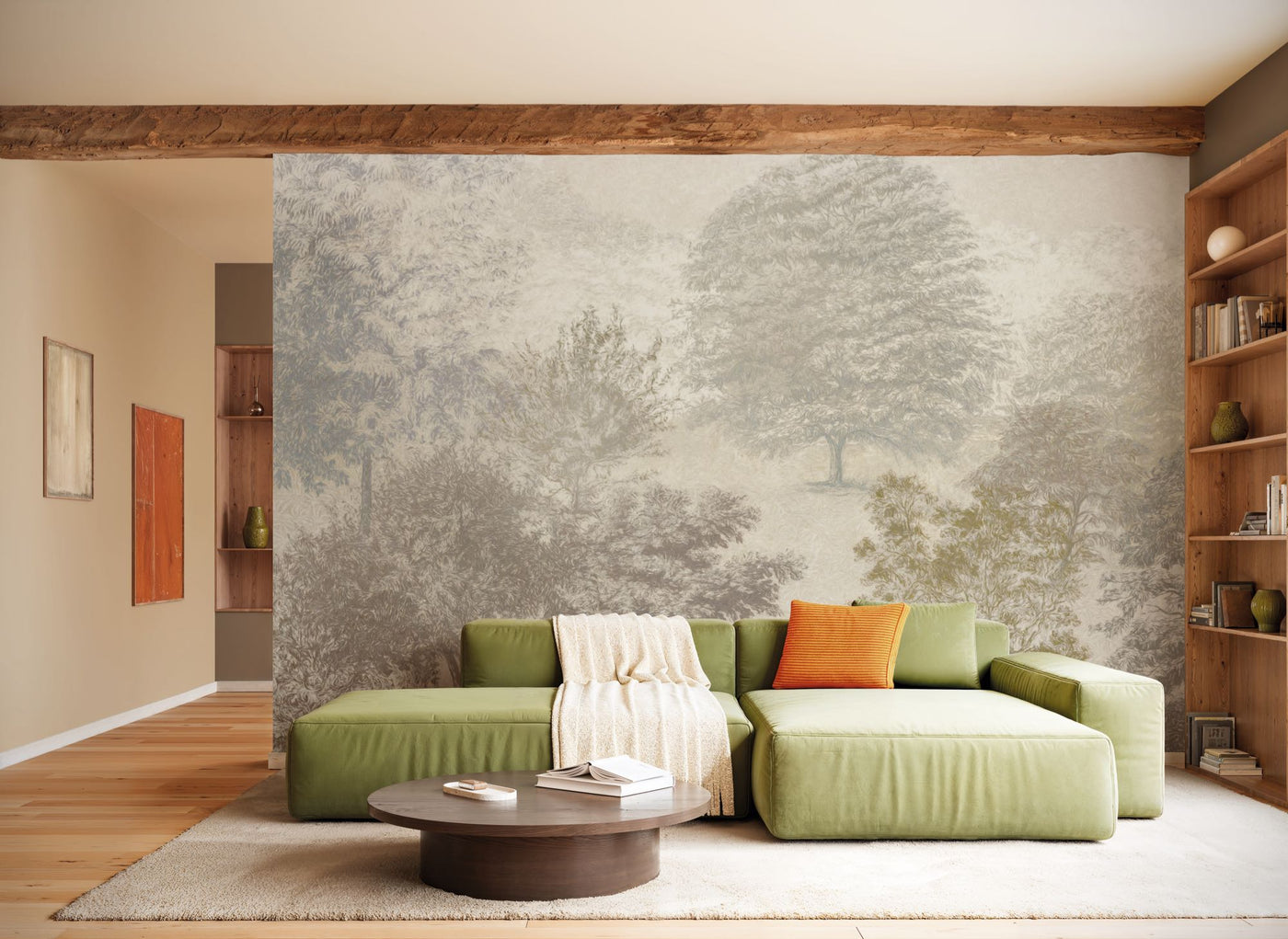
"As the days get shorter, warmth becomes more than a colour palette. It becomes a sensory language: light, texture, scent, sound, and softness." — A useful frame for the autumn reset.
The autumn warmth checklist
- Replace harsh light.
- Add one rug.
- Add one deeper tone.
- Layer two textures.
- Create one scent ritual.
- Add one natural material.
- Prepare one evening corner.
Seven small moves. None of them require a renovation, a designer, or even a full Saturday. Together they turn a summer room into an autumn one — quietly, sensorily, and without a single piece of pumpkin-shaped decor.
Explore our wall lights and table lamps, rugs, throws and cushions, natural scents, autumn-toned wallpapers and plant wall art. Or read our piece on the cream and walnut palette.




Leave a comment